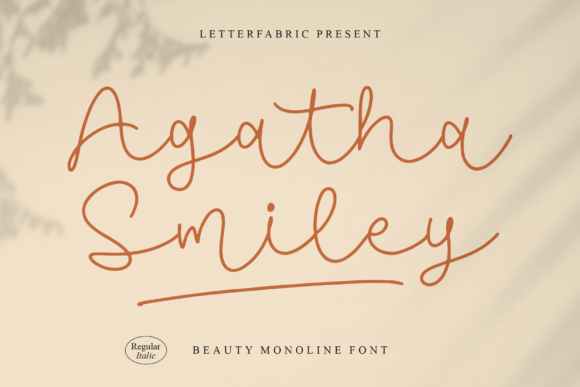
Agatha Smiley: A Monoline Font That Brings Personality to Branding Projects
Opening the Brand Board: First Impressions of Agatha Smiley
I recently started working on a visual refresh for a small artisanal coffee shop, and I opened my brand board with a blank canvas and a fresh mindset. One of the first things I wanted to explore was a font that could carry the warmth and personality of a cozy neighborhood café. That’s when I reached for Agatha Smiley—a monoline script font that had been sitting in my font folder for a bit, waiting for the right project.
At first glance, Agatha Smiley struck me with its clean, flowing lines and gentle bounce. It’s not overly dramatic like some script fonts can be, but it still has enough character to stand out in a logo or packaging design. I dropped it into the logo draft, and immediately, the brand felt more approachable. It wasn’t just a font—it was a tone of voice.
Design Personality and Visual Style
Agatha Smiley is a beautiful example of a modern monoline script. It doesn’t have thick-and-thin contrast like traditional calligraphy fonts, which gives it a smoother, more contemporary feel. The letters flow with a consistent weight, making it ideal for digital use and print applications where clarity matters.
What really stood out during my testing was how versatile the font felt across different mediums. I used it on a packaging mockup for custom coffee bags, and it looked elegant yet playful. The lowercase letters have a gentle bounce, while the uppercase characters are more structured but still retain a sense of warmth. It’s the kind of typeface that feels handmade without being overly whimsical.
Real-World Testing: From Logo to Social Media
I tested Agatha Smiley across multiple touchpoints: logo design, brand board headers, packaging labels, business cards, social media graphics, and even a simple website header. Here’s how it performed:
- Logo Design: On the café logo, Agatha Smiley added a personal, boutique feel. It worked especially well as a secondary text element next to a bold sans serif for the main brand name. The contrast between modern and script created visual interest without feeling cluttered.
- Packaging Mockup: Applied to a coffee bag label, the font looked clean and readable at a small size. I was worried about legibility at first, but because of its monoline nature, Agatha Smiley held up better than some other script fonts I’ve tried in the past.
- Business Cards: Used for the tagline and contact info, it gave the cards a soft, inviting tone. It didn’t overpower the design, which was important for a small business looking to project warmth and authenticity.
- Social Media Layout: On Instagram posts and stories, Agatha Smiley added a personal touch to quote graphics and promotional text. It paired well with both serif and sans serif fonts, making it easy to build a cohesive visual language.
Where Agatha Smiley Shines—and Where It Doesn’t
This font is best suited for short-form, high-impact use. Think logos, headlines, quotes, product names, and accent text. It’s not ideal for long body copy or formal corporate branding. I tried using it in a paragraph format for a brand story section on a website mockup, and it didn’t read well in that context.
Because of its script nature and monoline structure, Agatha Smiley is most effective when used as a display font or supporting accent typeface. It works beautifully in creative industries—think handmade shops, lifestyle brands, wellness spaces, and boutique cafés. It’s also a great fit for editorial design when you want a touch of elegance without the fuss of a traditional calligraphy font.
Practical Design Tips and Font Pairing Advice
One of the most important things I learned while working with Agatha Smiley is the value of restraint. It’s easy to get carried away with such a charming font, but it works best when balanced with more structured typefaces. I found success pairing it with a clean sans serif like Montserrat for headers and a serif like Playfair Display for body copy.
If you’re working on a brand identity or packaging design, test Agatha Smiley in different sizes and contexts before finalizing your layout. It’s also worth checking if the font includes alternate characters, ligatures, or swashes that could add more customization to your design. Many modern script fonts offer these features, and Agatha Smiley may include them depending on the version you purchase.
Don’t forget to review the licensing terms. If you're using this font for a client’s brand identity, product packaging, merchandise, or web design, make sure the license allows for commercial use. Some premium fonts require extended licenses for broader applications like print-on-demand or digital templates.
Final Notes: A Font Worth Testing
Agatha Smiley is more than just another script font—it’s a versatile tool that can bring warmth, elegance, and personality to the right project. Whether you’re designing a logo, a product label, or a social media graphic, it’s worth giving this monoline typeface a try. Just keep its strengths and limitations in mind, and always test it in real-world scenarios before committing to it in your final design.